Keep a healthy smile on your pet’s dial
When was the last time you had a good look in your pet’s mouth? Is their breath, for the most part, fresh? Do they gnaw a raw bone a few times a week? Do you have regular teeth cleaning rituals in place?
We remember to pay attention to our own pearly human teeth but, somehow, most of us forget about our pet’s teeth.
Tooth decay and gum disease, or periodontal disease, are some of the most common diseases presenting at vet clinics. 70-80% of cats and dogs over 3 years of age have dental issues. Only about 15% of cats and dogs get regular dental check ups and treatment.
There is more awareness from pet owners about dental care than ever before, but we are still a long way from paying proper attention to pet mouth health.
August is Pet Dental Awareness Month in Australia. It is an opportunity to remind people that their pet’s dental health is as important as their own. Just like for yourself, you should book your cat or dog for a dental check up every 6 to 12 months.
There are many things you can do as part of your pet care routine to ensure your furry little friend keeps a healthy smile and fresh breath.
Are you a brusher?
In theory, dogs and cats can have their teeth brushed every day, just like humans. It is the best way to keep dental disease away. Sound like a challenging task? Very few people actually succeed in brushing their pet’s teeth every day! Two or three times a week is a perfectly acceptable outcome.
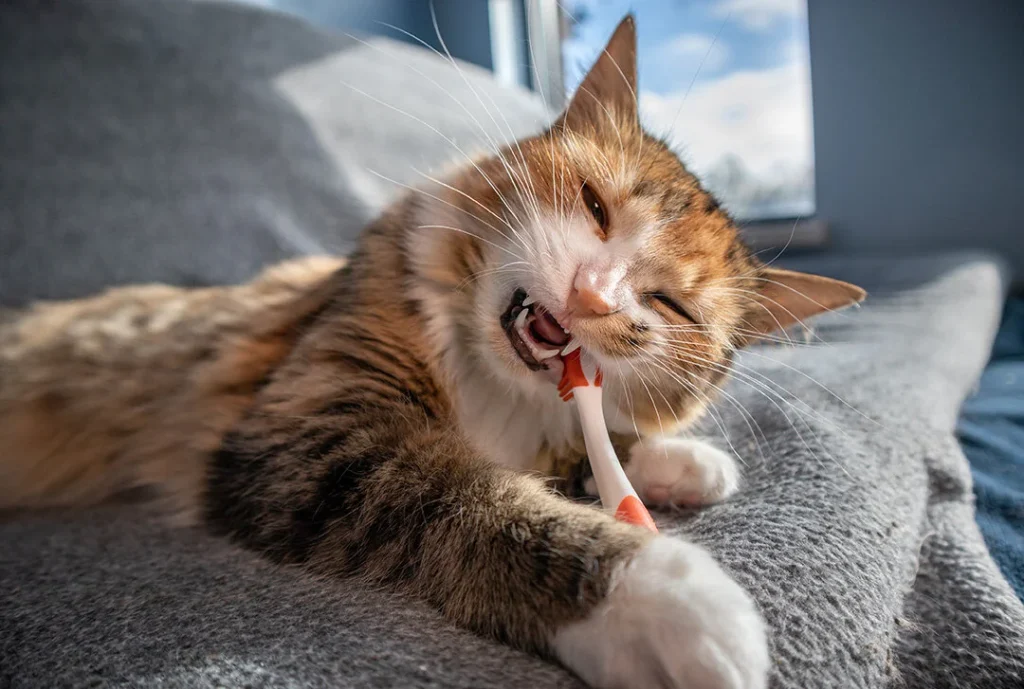
You can use a baby toothbrush or a special finger brush. There is a three-headed toothbrush designed for big dogs (it looks like a claw). When you brush, it cleans all sides in one go.
Human toothpaste is not safe for cats and dogs. Some of the ingredients are not suitable and many animals hate the taste of mint. There are delicious pet-friendly toothpastes available, made with specific ingredients, in flavours including beef or chicken. Cats and dogs can use the same toothpaste.
You can find paste and brushes at the pet store or your vet clinic.
Not everyone wants to brush or CAN brush their pet’s teeth. Animals can be very unaccommodating at times. Read on for plenty of other options for maintaining healthy gnashers.
Bring on the bones
Bones are the best natural teeth cleaner of all. Chewing on a bone removes plaque, in turn preventing gum disease, and gives the jaw muscles a good workout. They also aid digestion and contain calcium, phosphorus and other useful minerals. Most dogs and some cats will happily gnaw on a bone and clean their teeth while they are at it.
One or two bones a week is a great addition to your pet’s diet. It is important to feed the right type of bones (such as ribs, brisket, neck bones, chicken wings or rumps). Nothing smaller than a chicken wing or it might get stuck in their throat. Bones should ALWAYS be raw, never cooked, as they can splinter and get stuck, break a tooth or cause constipation.
Wing tips or small serves of chicken rump are great for cats but not all of them are going to go for it. Cats can be fussy … no surprise there. Try introducing bones when they are a kitten to get them used to the idea.
Most dogs will enjoy devouring a bone. If you have a bigger dog, step up the size of the bone. Try turkey wings or kangaroo bones. A rule of thumb is to feed a bone roughly the same size as your dog’s head or larger to prevent gulping or choking.
Avoid shanks or bones that are fatty on the inside. Vertebrae are good, so are crocodile bones. Also stay away from weight-bearing bones like large legs as they are hard and dense and can cause dental factures.
It is the mechanical action of chewing and activating saliva that cleans the teeth. As they gnaw the bone, any gunk on their teeth is being scraped off.
If your pet eats bones well (slowly with lots of gnawing and chewing), that may be all you need to do to care for their teeth.
If you have a guzzle guts who is likely to swallow the bone whole, come up with another plan to care for their teeth, like a suitable dental treat.
Beware of guzzlers
When you introduce bones for the first time, watch your pet like a hawk. Some will do the right thing and take their time to explore the bone. Others will devour it straight away and may get it stuck in their throat.
As a rule, always supervise your pets with their first few bones until they get the hang of it.
Dental treats
They are a great low-fuss way to ensure teeth get a clean. If your pet isn’t up for brushing and isn’t a fan of bones, then dental treats are the perfect solution.
Go for a low-processed product recommended by your vet. Do your research and read the ingredients panel. You are less likely to find a good dental treat at the supermarket. Look at your vet clinic or the pet store for reliable specialised products.
Chewy dental treats are designed to break down slowly, activating saliva and enzymes to clean teeth. Other products have a chalky or sticky texture so the teeth are scraped and descaled as your pet chews. Choose a treat that will take a long time to eat, not something that can be wolfed down in a few seconds.
There is a prescription dry food to cater for teeth that need a solid work out. As the large pieces break down, they scrape the teeth. This treatment is good if your pet doesn’t bother chewing at all and just swallows their food whole.
Ask your vet about suitable dental treats for your pet’s needs.
Stinky dog breath is a myth
It’s not true that dogs and cats naturally have stinky breath. Your dog’s breath should not be smelly, unless as a direct result of something recently eaten or explored. The old dog breath joke falls flat.
If your pet’s breath is consistently foul, book a dental check up with your vet clinic, and start paying more attention to their chompers.
What causes dental disease?
Not having regular cleaning rituals (brushing, bones, low-processed dental treats) causes dental decay.
Like in humans, diet plays a big part. Highly processed foods can trigger periodontal disease. A balanced diet of fresh meat and vegetables or low-processed pet food, accompanied by a daily supplement and one or two bones a week, is all your pet needs. Finely ground bone mixed with other fresh ingredients can be an excellent source of nutrients for teeth health.
Dogs with crooked teeth can get food stuck in crevices and gaps, meaning they are prone to decay if their teeth are not well cleaned regularly. Check your dog’s mouth to see if they are likely to have this problem.
Baby teeth
Cats and dogs, like us, only get two sets of teeth in their lifetime. They start to lose their baby teeth around 4 months of age.
They should have a full set of adult teeth by 6 months old. If their baby ivories haven’t fallen out by then, it is highly unlikely they are going to fall out on their own. Your vet can remove them.
Does your pet have trust issues?
Animals don’t naturally like being touched around the mouth. Train them from when they are babies. Poke and play around their mouth area. Flip their lip back. Use gauze or your finger and pretend to brush their teeth. Pretend you are a vet and get them to hold their mouth open for you.
Puppies are much easier to train this way than kittens. Older dogs may be trainable but it depends on their personality.
They don’t actually need this treatment for baby teeth but they are getting used to being touched around the mouth for when they are older. Reward your pup if they let you play with their mouth.
Will your kitten let you regularly touch their mouth? Probably not. Cats, for the most part, don’t care about rewards and are well-known for being unresponsive to training. It might be easier to try bones or dental treats to keep your cat’s teeth clean.
Signs your pet has a sore mouth
Look out for consistently smelly breath. They might appear to be off their food or avoid hard or chewy textures. Drooling and pawing at their mouth are clear signs that all is not well.
If dental disease is allowed to fester, you may see swelling around the mouth or under the eye and possibly some discharge.
If your vet identifies significant dental disease, they may prescribe a short course of medication to manage the condition until surgery can be arranged, if required.
Extreme issues with plaque can cause heart disease or block major blood vessels. Technically, like in humans, unchecked periodontal disease can eventually cause death.
What if my pet needs teeth pulled out?
It is a very common procedure and not a big problem. They will survive just fine without all their teeth. You may need to adjust their diet so they can chew comfortably.
Some dogs who have lost lots of teeth have trouble keeping their tongues inside their mouths. These poor pups can suffer from a dry tongue. If this sounds like your dog, don’t stress. They will be fine, just adjust the texture of their diet with guidance from your vet.
Dogs are very adaptable. A dog with no teeth still has a strong jaw and can adjust how they eat.
Is pet dental care expensive?
Check ups which are done awake may be offered free of charge if no other services are required at the consult. Ask your vet.
Dentistry, in general, is expensive because of the materials and equipment required. We know this. On top of that, animals are not capable of sitting still and holding their mouth open. For advanced procedures beyond a basic examination, your pet will need to be put under an anaesthetic to get the job done properly. Any surgery requiring anaesthesia, of course, pushes the price up.
Chat with your vet to be clear about procedures and costs.
Is advanced pet dentistry a thing?
There are a few specialised pet dental clinics that offer services like fillings, root canals and implants. They pretty much do whatever a human dentist can do. Just make sure you have a healthy bank balance on hand to pay for it!
Your regular vet clinic can’t offer this kind of advanced service. The vet nurses can advise, clean and check your pet’s teeth. Your vet can surgically pull decayed teeth out under anaesthetic.
Some vet clinics, including Ringwood Vet Clinic, can do dental x-rays.
Your pet’s teeth matter
Clean your pet’s teeth regularly in whatever way you can. You don’t need to wrestle your pet into a stronghold, like a resistant toddler, and force a toothbrush in their mouth every day. There are many effective and less stressful ways to slow down periodontal disease.
A fresh, nutrient-dense diet, supported by a few bones a week or a slow-chewing dental treat, is a great way to manage your pet’s dental health. And book them every 6 to 12 months for a check up. Ask your vet to schedule reminders.
You remember to care for your own teeth every day, so what are you doing for your pet? Adapt your health habits to include the pets in your life.